mario dcunha
QuickBooks Lending Expansion:
Redesigning a limited loan experience into a scalable marketplace.
DISCLAIMER
QuickBooks is Intuit's financial platform for businesses—a complex, multi-layered SaaS ecosystem spanning accounting, payroll, and managing money across products, tiers, and legacy systems. My work focused on the 'managing money' domain—helping users with banking, payments, and loans. QuickBooks is primarily web-based with companion mobile apps. (QuickBooks underwent a major UI refresh in November 2025; this case study reflects the prior version.)
SUMMARY
Lending was product-centric and limited. I reframed it around customer intent and used experiments to scale towards a regulated marketplace to ~2x loan volume.
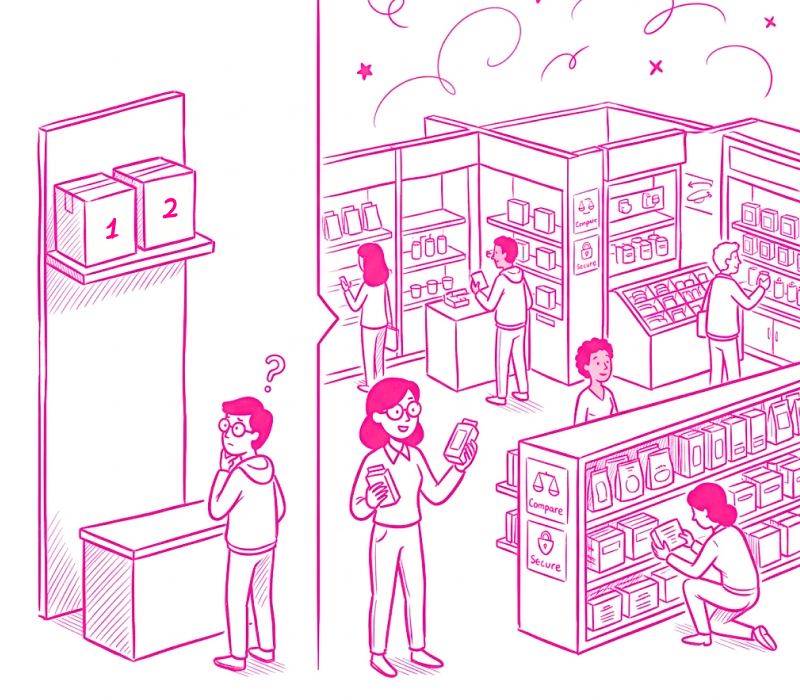
Most products have a "try it and come back" cycle. Lending doesn't. When someone takes a loan, that's it—there's no "maybe later." That's why everything before applying becomes the real product. Can I get approved? Is this the right option? Do I trust this enough to commit? The consideration phase is where lending lives or dies. Once someone activates, managing their loan is straightforward. Getting them there with confidence—that's the hard part.
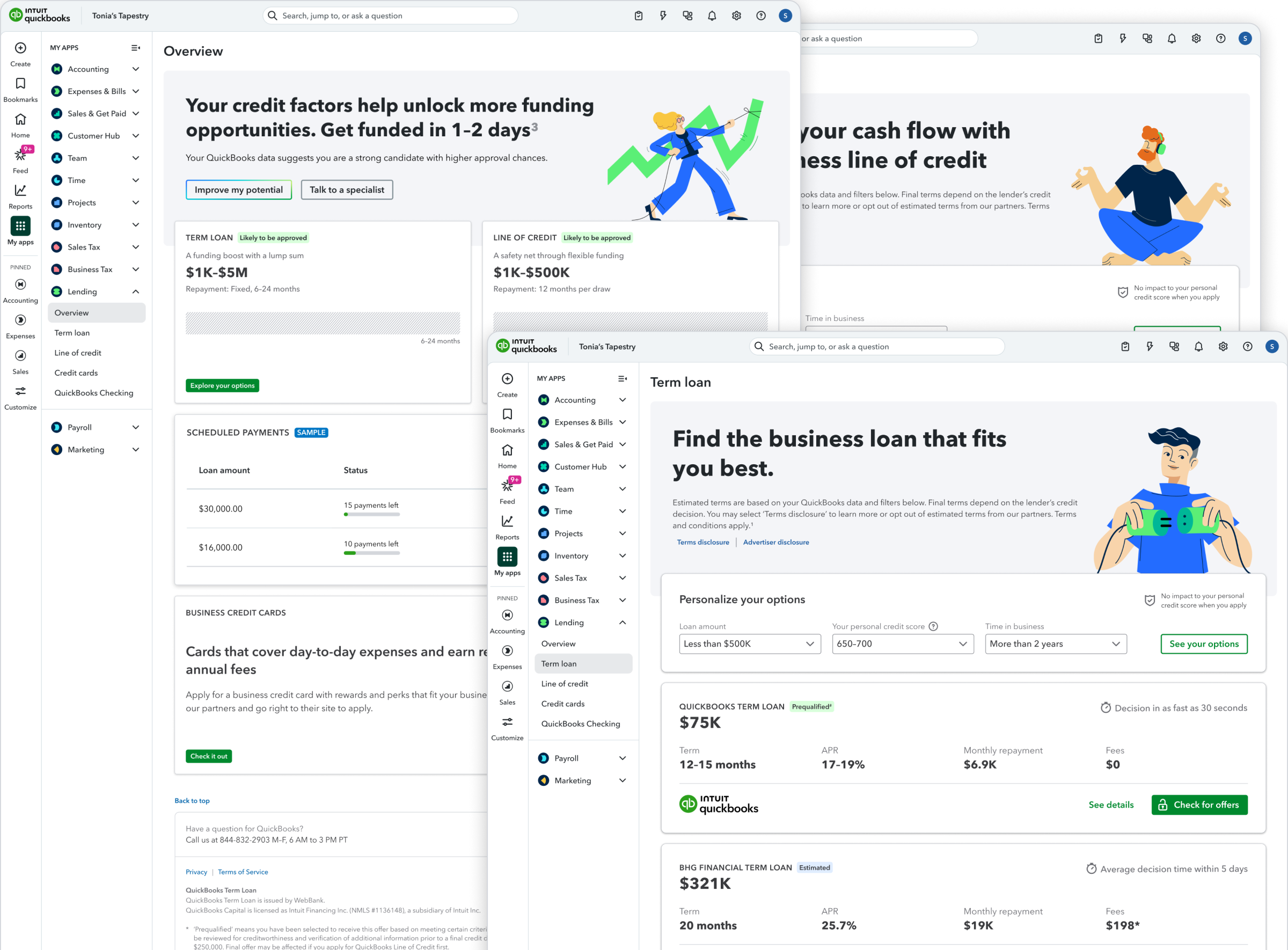
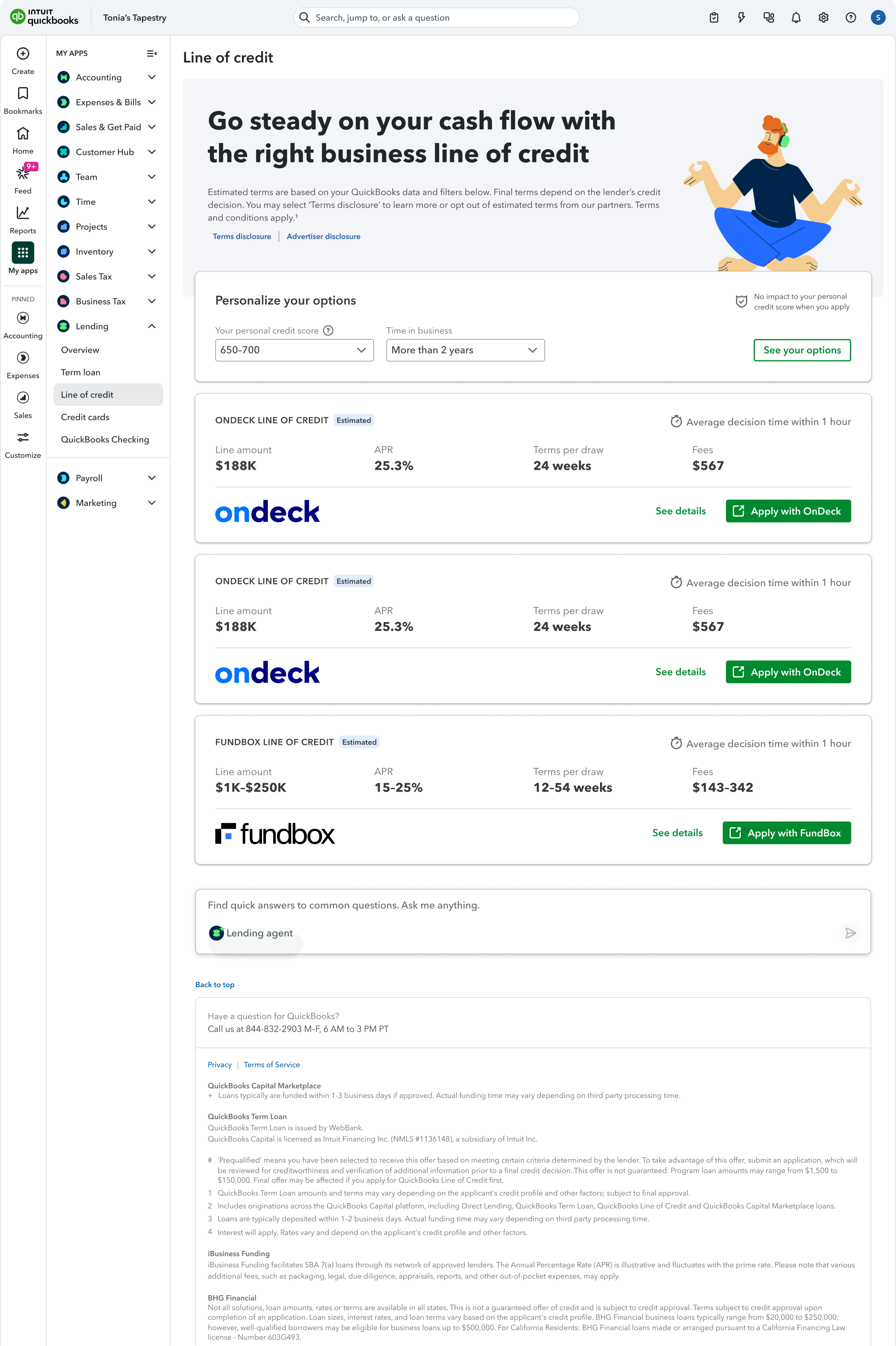
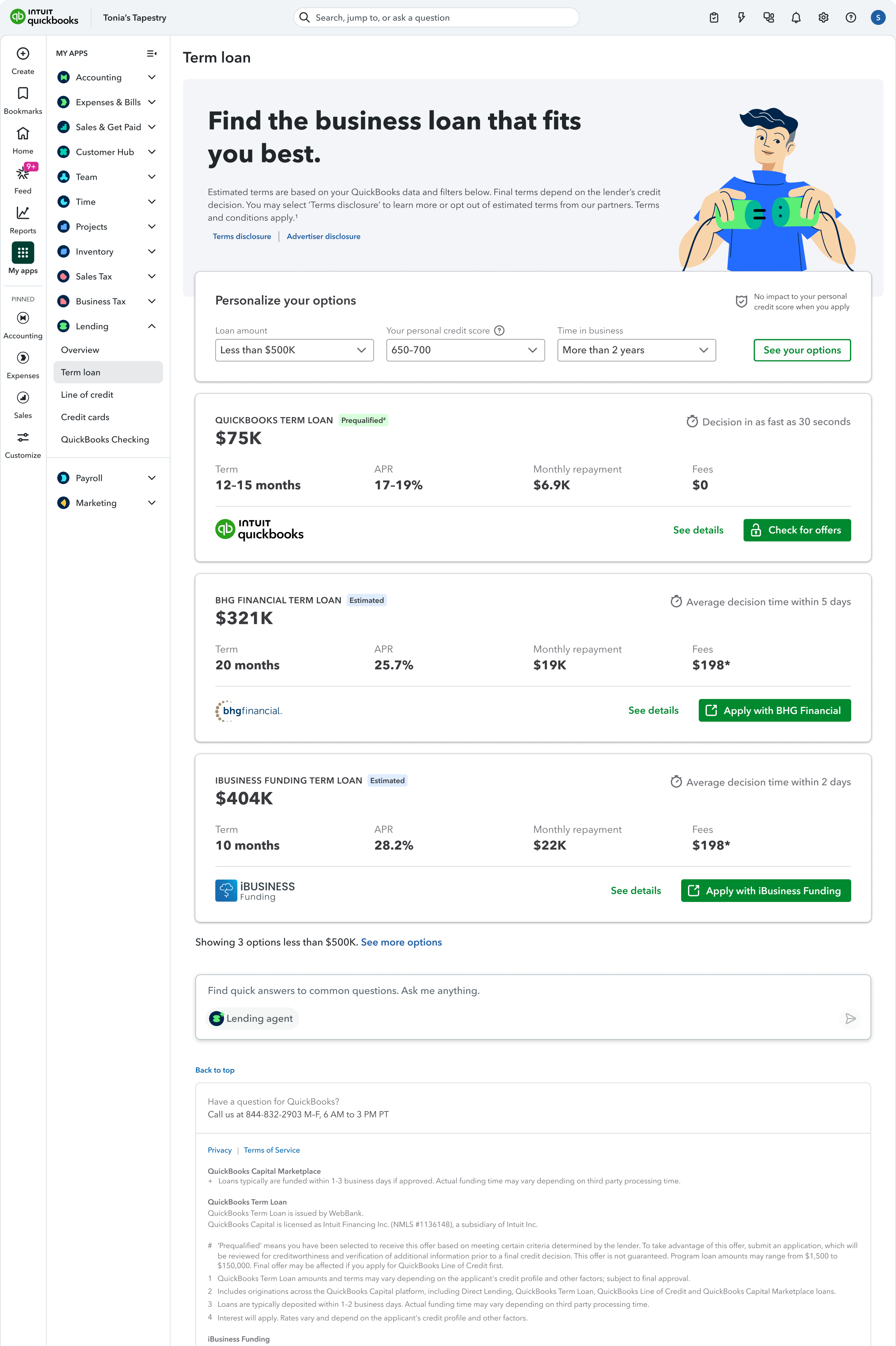
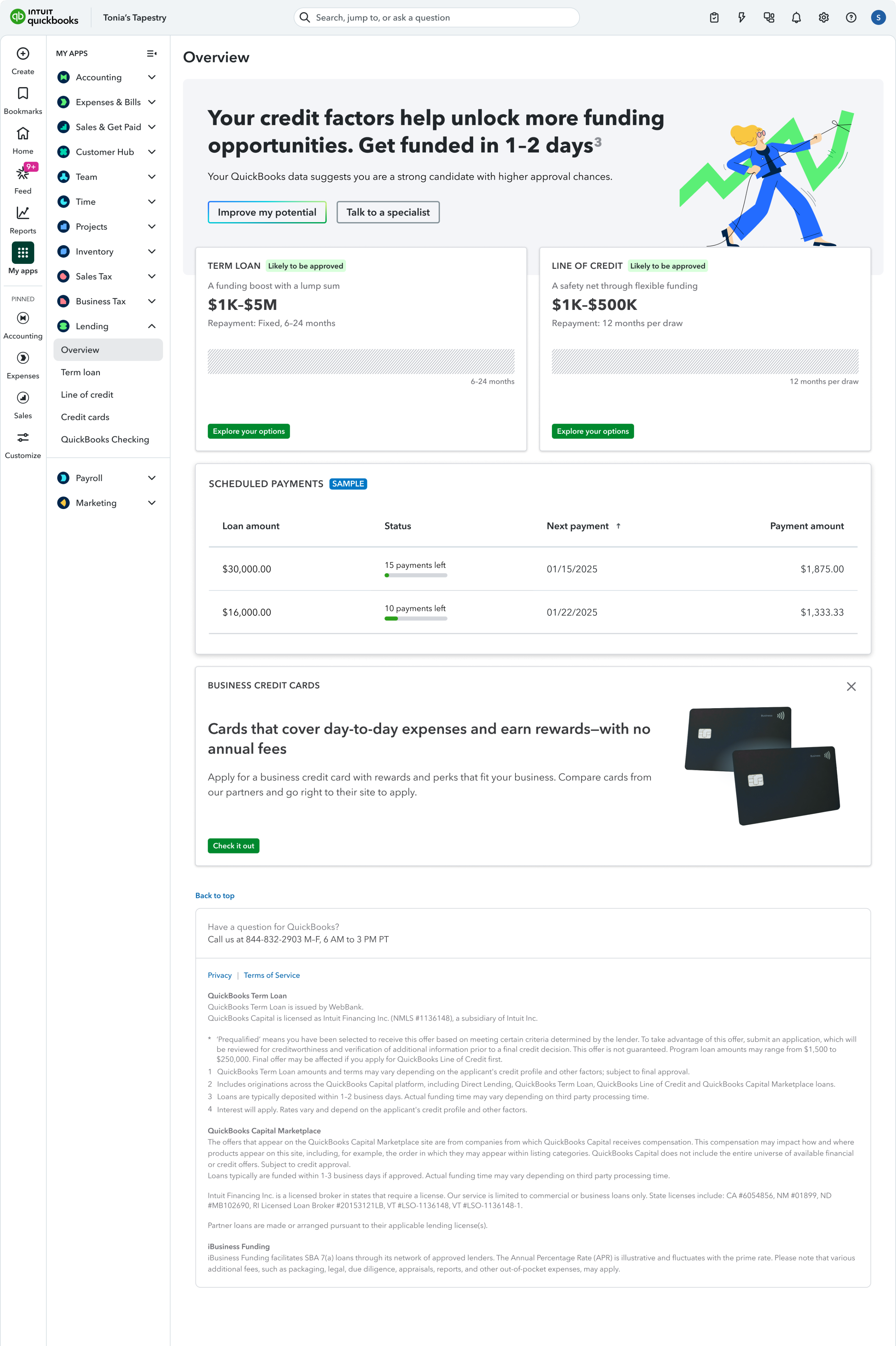
The existing experience had two loan products, both capped at $200K, organized around product pages instead of how borrowers actually think. I redesigned the information architecture around customer intent, built a reusable system that onboarded new lending partners with a scalable design, and used experiments to de-risk every decision in a heavily regulated space.
Impact: ~2x over target loan volume, 12% increase in applications, 66% higher revenue per visitor for larger loans—with zero erosion of existing loans and no compliance issues.
Full case study coming soon. pinky swear.

mario dcunha
© ️2026 Mario Dcunha. All Rights Reserved.
mario dcunha
QuickBooks Lending Expansion:
Redesigning a limited loan experience into a scalable marketplace.
DISCLAIMER
QuickBooks is Intuit's financial platform for businesses—a complex, multi-layered SaaS ecosystem spanning accounting, payroll, and managing money across products, tiers, and legacy systems. My work focused on the 'managing money' domain—helping users with banking, payments, and loans. QuickBooks is primarily web-based with companion mobile apps. (QuickBooks underwent a major UI refresh in November 2025; this case study reflects the prior version.)
SUMMARY
Lending was product-centric and limited. I reframed it around customer intent and used experiments to scale towards a regulated marketplace to ~2x loan volume.
Most products have a "try it and come back" cycle. Lending doesn't. When someone takes a loan, that's it—there's no "maybe later." That's why everything before applying becomes the real product. Can I get approved? Is this the right option? Do I trust this enough to commit? The consideration phase is where lending lives or dies. Once someone activates, managing their loan is straightforward. Getting them there with confidence—that's the hard part.
The existing experience had two loan products, both capped at $200K, organized around product pages instead of how borrowers actually think. I redesigned the information architecture around customer intent, built a reusable system that onboarded new lending partners with a scalable design, and used experiments to de-risk every decision in a heavily regulated space.
Impact: ~2x over target loan volume, 12% increase in applications, 66% higher revenue per visitor for larger loans—with zero erosion of existing loans and no compliance issues.
Full case study coming soon. pinky swear.

mario dcunha
© ️2026 Mario Dcunha. All Rights Reserved.
mario dcunha
QuickBooks Lending Expansion:
Redesigning a limited loan experience into a scalable marketplace.
DISCLAIMER
QuickBooks is Intuit's financial platform for businesses—a complex, multi-layered SaaS ecosystem spanning accounting, payroll, and managing money across products, tiers, and legacy systems. My work focused on the 'managing money' domain—helping users with banking, payments, and loans. QuickBooks is primarily web-based with companion mobile apps. (QuickBooks underwent a major UI refresh in November 2025; this case study reflects the prior version.)
SUMMARY
Lending was product-centric and limited. I reframed it around customer intent and used experiments to scale towards a regulated marketplace to ~2x loan volume.
Most products have a "try it and come back" cycle. Lending doesn't. When someone takes a loan, that's it—there's no "maybe later." That's why everything before applying becomes the real product. Can I get approved? Is this the right option? Do I trust this enough to commit? The consideration phase is where lending lives or dies. Once someone activates, managing their loan is straightforward. Getting them there with confidence—that's the hard part.
The existing experience had two loan products, both capped at $200K, organized around product pages instead of how borrowers actually think. I redesigned the information architecture around customer intent, built a reusable system that onboarded new lending partners with a scalable design, and used experiments to de-risk every decision in a heavily regulated space.
Impact: ~2x over target loan volume, 12% increase in applications, 66% higher revenue per visitor for larger loans—with zero erosion of existing loans and no compliance issues.
Full case study coming soon. pinky swear.

mario dcunha
© ️2026 Mario Dcunha. All Rights Reserved.
mario dcunha
QuickBooks Lending Expansion:
Redesigning a limited loan experience into a scalable marketplace.
DISCLAIMER
QuickBooks is Intuit's financial platform for businesses—a complex, multi-layered SaaS ecosystem spanning accounting, payroll, and managing money across products, tiers, and legacy systems. My work focused on the 'managing money' domain—helping users with banking, payments, and loans. QuickBooks is primarily web-based with companion mobile apps. (QuickBooks underwent a major UI refresh in November 2025; this case study reflects the prior version.)
SUMMARY
Lending was product-centric and limited. I reframed it around customer intent and used experiments to scale towards a regulated marketplace to ~2x loan volume.
Most products have a "try it and come back" cycle. Lending doesn't. When someone takes a loan, that's it—there's no "maybe later." That's why everything before applying becomes the real product. Can I get approved? Is this the right option? Do I trust this enough to commit? The consideration phase is where lending lives or dies. Once someone activates, managing their loan is straightforward. Getting them there with confidence—that's the hard part.
The existing experience had two loan products, both capped at $200K, organized around product pages instead of how borrowers actually think. I redesigned the information architecture around customer intent, built a reusable system that onboarded new lending partners with a scalable design, and used experiments to de-risk every decision in a heavily regulated space.
Impact: ~2x over target loan volume, 12% increase in applications, 66% higher revenue per visitor for larger loans—with zero erosion of existing loans and no compliance issues.
Full case study coming soon. pinky swear.

mario dcunha
© ️2026 Mario Dcunha. All Rights Reserved.
mario dcunha
QuickBooks Lending Expansion:
Redesigning a limited loan experience into a scalable marketplace.
DISCLAIMER
QuickBooks is Intuit's financial platform for businesses—a complex, multi-layered SaaS ecosystem spanning accounting, payroll, and managing money across products, tiers, and legacy systems. My work focused on the 'managing money' domain—helping users with banking, payments, and loans. QuickBooks is primarily web-based with companion mobile apps. (QuickBooks underwent a major UI refresh in November 2025; this case study reflects the prior version.)
SUMMARY
Lending was product-centric and limited. I reframed it around customer intent and used experiments to scale towards a regulated marketplace to ~2x loan volume.
Most products have a "try it and come back" cycle. Lending doesn't. When someone takes a loan, that's it—there's no "maybe later." That's why everything before applying becomes the real product. Can I get approved? Is this the right option? Do I trust this enough to commit? The consideration phase is where lending lives or dies. Once someone activates, managing their loan is straightforward. Getting them there with confidence—that's the hard part.
The existing experience had two loan products, both capped at $200K, organized around product pages instead of how borrowers actually think. I redesigned the information architecture around customer intent, built a reusable system that onboarded new lending partners with a scalable design, and used experiments to de-risk every decision in a heavily regulated space.
Impact: ~2x over target loan volume, 12% increase in applications, 66% higher revenue per visitor for larger loans—with zero erosion of existing loans and no compliance issues.
Full case study coming soon. pinky swear.

mario dcunha
© ️2026 Mario Dcunha. All Rights Reserved.
mario dcunha
QuickBooks Lending Expansion:
Redesigning a limited loan experience into a scalable marketplace.
DISCLAIMER
QuickBooks is Intuit's financial platform for businesses—a complex, multi-layered SaaS ecosystem spanning accounting, payroll, and managing money across products, tiers, and legacy systems. My work focused on the 'managing money' domain—helping users with banking, payments, and loans. QuickBooks is primarily web-based with companion mobile apps. (QuickBooks underwent a major UI refresh in November 2025; this case study reflects the prior version.)
SUMMARY
Lending was product-centric and limited. I reframed it around customer intent and used experiments to scale towards a regulated marketplace to ~2x loan volume.
Most products have a "try it and come back" cycle. Lending doesn't. When someone takes a loan, that's it—there's no "maybe later." That's why everything before applying becomes the real product. Can I get approved? Is this the right option? Do I trust this enough to commit? The consideration phase is where lending lives or dies. Once someone activates, managing their loan is straightforward. Getting them there with confidence—that's the hard part.
The existing experience had two loan products, both capped at $200K, organized around product pages instead of how borrowers actually think. I redesigned the information architecture around customer intent, built a reusable system that onboarded new lending partners with a scalable design, and used experiments to de-risk every decision in a heavily regulated space.
Impact: ~2x over target loan volume, 12% increase in applications, 66% higher revenue per visitor for larger loans—with zero erosion of existing loans and no compliance issues.
Full case study coming soon. pinky swear.
mario dcunha
© ️2026 Mario Dcunha. All Rights Reserved.
mario dcunha
QuickBooks Lending Expansion:
Redesigning a limited loan experience into a scalable marketplace.
DISCLAIMER
QuickBooks is Intuit's financial platform for businesses—a complex, multi-layered SaaS ecosystem spanning accounting, payroll, and managing money across products, tiers, and legacy systems. My work focused on the 'managing money' domain—helping users with banking, payments, and loans. QuickBooks is primarily web-based with companion mobile apps. (QuickBooks underwent a major UI refresh in November 2025; this case study reflects the prior version.)
SUMMARY
Lending was product-centric and limited. I reframed it around customer intent and used experiments to scale towards a regulated marketplace to ~2x loan volume.
Most products have a "try it and come back" cycle. Lending doesn't. When someone takes a loan, that's it—there's no "maybe later." That's why everything before applying becomes the real product. Can I get approved? Is this the right option? Do I trust this enough to commit? The consideration phase is where lending lives or dies. Once someone activates, managing their loan is straightforward. Getting them there with confidence—that's the hard part.
The existing experience had two loan products, both capped at $200K, organized around product pages instead of how borrowers actually think. I redesigned the information architecture around customer intent, built a reusable system that onboarded new lending partners with a scalable design, and used experiments to de-risk every decision in a heavily regulated space.
Impact: ~2x over target loan volume, 12% increase in applications, 66% higher revenue per visitor for larger loans—with zero erosion of existing loans and no compliance issues.
Full case study coming soon. pinky swear.
mario dcunha
© ️2026 Mario Dcunha. All Rights Reserved.